|
 |
 |

|

|
 |
 |
 |
 |
 |
 |
 |
 |
 |
 |
 |
 |
 |
 |
|
|
|
Texas State buys land to protect Spring Lake area In November, the Texas State University System Board of Regents approved paying $4.5 million for 128 acres on Spring Road, near San Marcos Springs. Water features on the property are directly connected to San Marcos Springs and the San Marcos River. Robert Mace, Director of the university's Meadows Center for Water and the Environment, said "the university's acquisition of this property protects the quantity and quality of our water and produces unique research opportunities for our students." One of the features on the property is an estavelle, which can alternately act as a recharge feature or a spring, depending on Aquifer levels. Protecting the area from development will directly benefit the water quality of Spring Lake and the seven endangered aquatic species that live there. |
|||||||||
|
Comal County to seek funds for Aquifer protection In October, Comal County commissioners voted to apply for a $30 million loan from the State to purchase and protect land in the Edwards and Trinity aquifer watersheds. The money would come from the Texas Water Development Board's State Revolving Fund. County Commissioner Kevin Webb said the move to secure money to protect land from development "has been a long time coming." He said "I've worked on a lot of things here, and I don't know if any of them mean more to me than this one." If the application is approved, commissioners will vote again on whether to accept the funding and then begin a process to develop rules and criteria for using the money. TCEQ commissioners approve permit for Guajolote Ranch On October 22, TCEQ commissioners approved a controverial permit to release treated water to Helotes Creek from 2,900 homes on 1,100 acres. TCEQ Chairwoman Brooke Paul said the evidence and case record supported the May determination of State judges "that the applicant met its burden to establish that the draft permit is protective and meets all applicable requirements." Opponents called it a setback but said "this fight is not over", and indicated they would oppose the creation of a Municipal Utility District, which would have to be approved by the City of San Antonio before the project could move forward. |
|||||||||
|
USFWS announces release of Final Recovery Plan for endangered Edwards species On June 11, the U.S. Fish and Wildlife Service announced the release of a Final Recovery Plan (view here) for six endangered and one threatened species that depend on the Edwards Aquifer. An original version was prepared in 1985, and a first revision was completed in 1996. The Recovery Plan includes one plant, two beetles, one fish, one crustacean, and two salamanders. They are the endangered Texas wild-rice, Comal Springs dryopid beetle, Comal Springs riffle beetle, fountain darter, Peck’s cave amphipod, Texas blind salamander, and the threatened San Marcos salamander. Recovery plans are not regulatory documents, and implementation of actions is not required by the Endangered Species Act. Instead, recovery plans serve as road maps with specific management actions to foster cooperation in conservation for listed species and their ecosystems. The recovery plan describes actions that are considered necessary for the recovery of the seven species, establishes delisting criteria, and estimates the time and cost to implement these recovery actions. The recovery plan provides guidance on how to achieve recovery of the species so that they no longer need protections under the ESA. The Plan focuses on:
Aquifer Authority reverts to Stage 3 On June 9, after additional heavy rains across the region that increased springflows and well levels, the Edwards Aquifer Authority declared a decrease to Stage 3 permit reductions for the San Antonio Pool of the Edwards Aquifer. |
|||||||||
|
Aquifer Authority declares Stage 5 for first time, then reverts to Stage 4 On May 23, for the first time ever, the Edwards Aquifer Authority declared an increase to Stage 5 permit reductions for the San Antonio Pool of the Edwards Aquifer. The declaration was short lived: on May 29 EAA declared a decrease to Stage 4 reductions after 6-8 inches of rain soaked much of the region. When the EAA declares a Stage, pumping reductions are required of permit holders. San Antonio continued to enforce its own Stage 3 rules and did not move to a higher stage because it has a large portfolio of water sources and can meet required cutbacks by using alternate sources other than the Edwards. State judges back Guajolote Ranch permit On May 19, judges at the State Office of Administrative Hearings (SOAH) issued a Proposal for Decision (PFD) that recommended granting of a wastewater discharge permit for the controversial Guajolote Ranch project. The decision follows a three-day hearing in February. The judges agreed with TCEQ's assessment that granting of the permit would not impair existing water quality uses and they would be maintained and protected. After SOAH judges issue a PDF, the matter returns to TCEQ Commissioners for a final decision. |
|||||||||
|
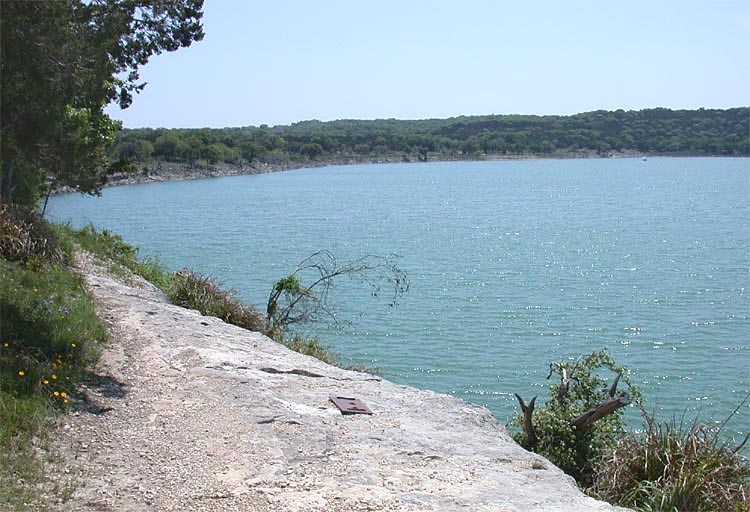
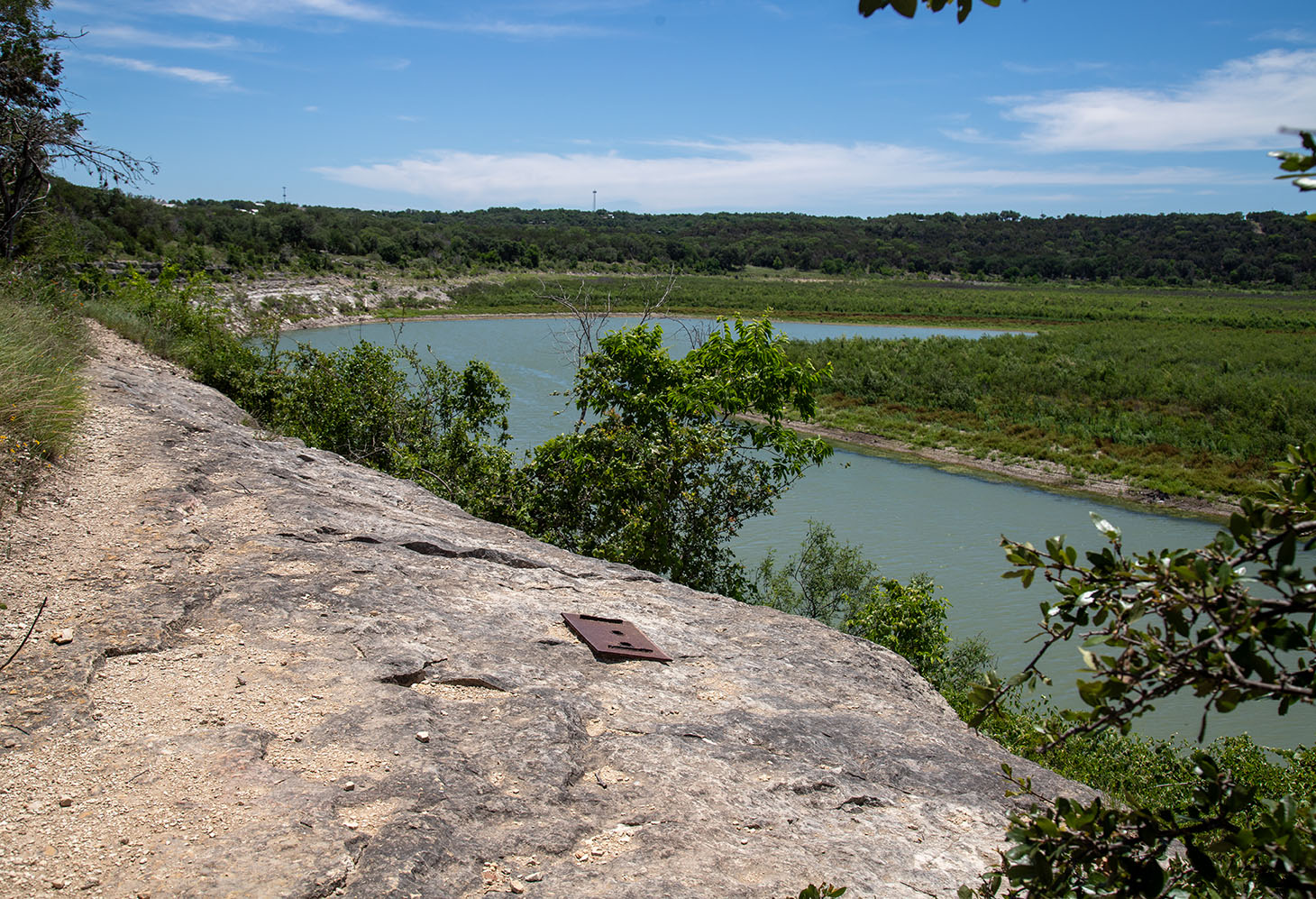
Canyon Lake reaches lowest level since it was first filled In April of 2025, water levels in Canyon Lake reached new record low water levels, the lowest since the reservoir was first filled in the 1960s. On April 8 it was considered to be only 47.1% full. The level continued to drop into May when the photo at lower right was taken:
|
|||||||||
|
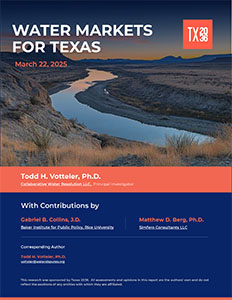
Votteler publishes new article on Water Markets for Texas On March 22, prolific Edwards Aquifer author Todd Votteler published a new article entitled Water Markets for Texas, a thorough and thoughtful analysis of the importance of water markets and barriers to their establishment. Longtime readers of these pages know that Mr. Votteler is particularly well qualified to author on this topic. He served as special master for the U.S. District Court in Midland in the Sierra Club v. San Antonio case, the famous lawsuit that resulted in the management of the Edwards Aquifer that is in place today. He also worked for the court monitor during Sierra Club v. Babbitt and has in-depth first hand knowledge of the many complicated legal, hydrologic, economic, and cultural issues surrounding the Edwards Aquifer and water issues in Texas. His previous articles have examined almost all aspects of water in Texas, including boondoggle water development schemes, drought, floods, and Texas water policy. I am pleased to be able to offer a selection of his publications for reading and downloading in The Todd Votteler Archives.
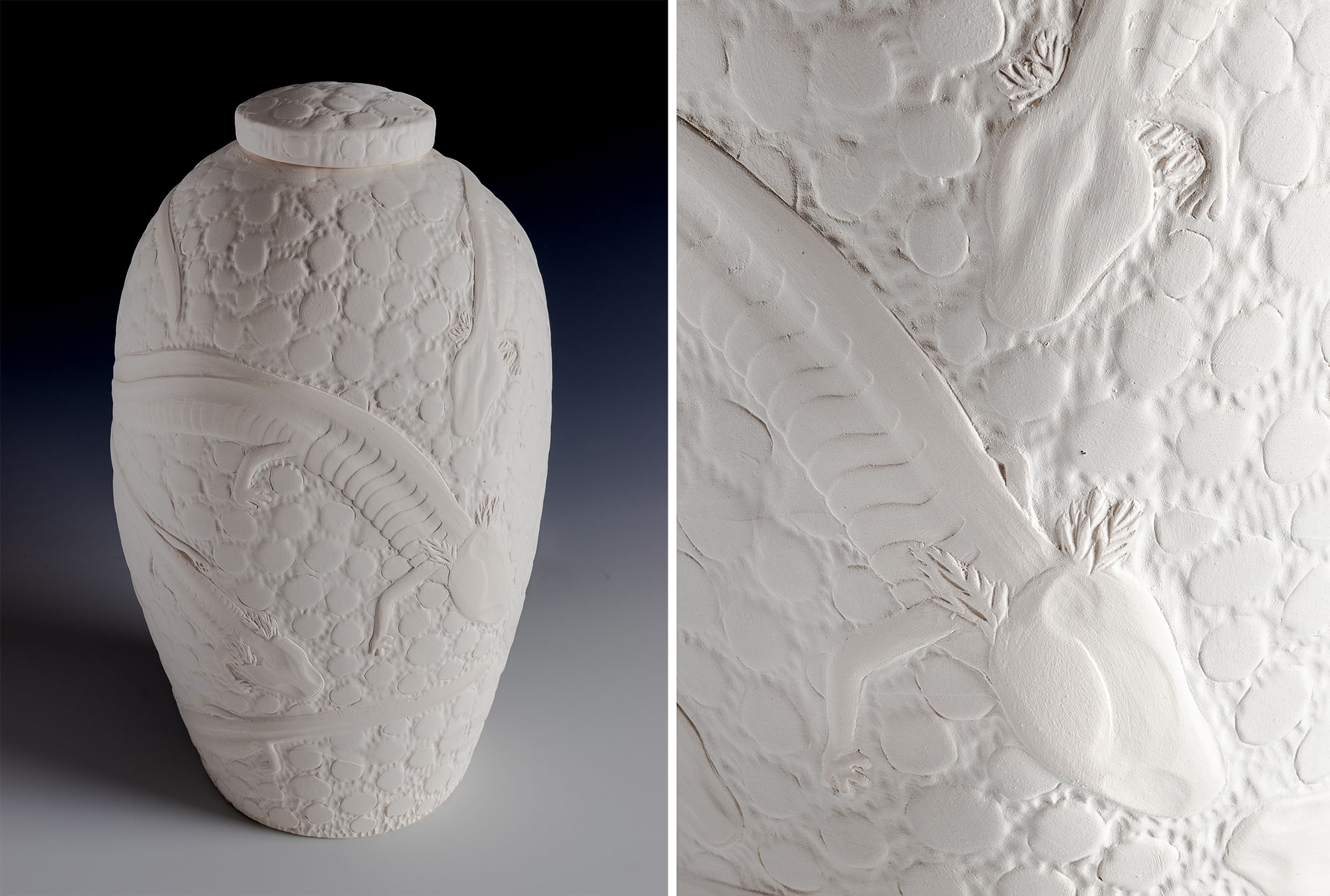
Texas Blind Salamander included in art project to highlight endangered species In March, Montana artist and professor Julia Galloway was working on an ambitious project to raise awareness about endangered species by creating a ceramic urn to represent each of the approximately 1,200 species in the U.S. that are threatened, endangered, recovered, or extinct. I was very happy she was able to use my Texas Blind Salamander photo to create the urn below.
TCEQ Office of Public Interest Counsel recommends denial of Guajolote Ranch permit In mid-March, the Office of Public Interest Counsel (OPIC), an independent office within TCEQ that is a party to all contested case hearings, recommended that TCEQ commissioners deny the Guajalote Ranch discharge permit. OPIC lawyers said "Upon consideration of all testimony regarding the proposed daily average effluent limit of 0.15 mg/L for total phosphorous, OPIC agrees with Protestant's contention that Applicant has failed to meet its burden to show that the draft permit is sufficiently protective of water quality." They also noted "Country streams like Helotes Creek should be maintained at 0.02 mg/L [of phosphorous] to maintain natural algae assemblages and to protect the most sensitive fish species." In making their final decision on the permit, TCEQ commissioners will consider all briefs and filings, including those from OPIC. |
|||||||||
|
Sale of land to Texas Parks and Wildlife will expand Government Canyon State Natural Area In February, a deal was closed for purchase by the Texas Parks and Wildlife Department of 823 acres that will expand the 12,000 acre Government Canyon State Natural Area. The land had been owned for generations by the McNeel family and the state agency paid $8 million to acquire it. James McNeel said he had many other offers to buy the land, but wanted more for the land than to be carved up and sold for development. He grew up here camping and trail running and knows the creek beds, cliffs, hilltops, farmlands, and forests well. He said "We got pretty interested in the idea that we could find a way to help the problem in the state of Texas of having very, very, very little publicly accessible or public land. So when the time came to start thinking about what to do with this property...and exciting opportunity just came up. My values and beliefs about the built environment and what makes human life actually worth living and helps people to actually flourish is deeply aligned with this attitude of making sure there's fair and equitable access to nature." Readers of these pages who have explored the deep story on Government Canyon will recall this area was the site of the first pitched battle over Edwards Aquifer protection in the early 1970s. The proposal was to develop 9,000 acres known as Ranch Town into homes for 88,000 people, and future San Antonio Mayor Phil Hardberger represented environmental interests in opposing it. They lost, but the economic downturn of the mid 1970s resulted in nothing much actually being built. About this time another future San Antonio Mayor Lila Cockrell suggested the best way to protect the Edwards might be just to buy sensitive tracts of land. It wasn't until 1993 that most of what would have been Ranch Town was purchased to become Government Canyon, and in 2000 voters first approved a sales tax to acquire other sensitive tracts of land for Aquifer protection. Hearing held on Guajolote Ranch discharge permit During the last week of February, judges from the State Office of Administrative Hearings held a three-day hearing regarding the proposed wastewater discharge permit for Guajolote Ranch. Opponents continued to argue that wastewater from the plant would harm wildlife and water quality, including both nearby wells and parts of the Trinity and Edwards aquifers. TCEQ's review of the draft permit determined that "existing water quality uses will not be impaired by this permit action" and that "existing uses will be maintained and protected." Troy Hotchkiss, an engineer who worked on the permit application, filed testimony before the hearing and said the plant would use "the most advanced wastewater treatment currently available" and would "achieve the highest levels of domestic wastewater treatment commonly achievable." Hydrologist and geologist Ron Green testified on behalf of the opponents and said the discharge area sits above the Trinity Aquifer and Edwards Aquifer Contributing Zone, and there are geologic faults in the discharge route that "could provide conduits for the flow of contaminants into the groundwater." After the hearing, parties were scheduled to file closing briefs by March 11 and responses to brief by March 21. A proposal for decision from the judges was expected by May 20, and then the matter returns to TCEQ for a final decision. Company fined for building in Recharge Zone without permit On February 27, TCEQ commissioners were scheduled to consider an agreed order that would assess a penalty of $20,000 against NPC Braunfels LLC, which allegedly began construction on a project in the Recharge Zone without required permits and protection plans. TCEQ sent an investigator to the site in May 2023 in response to citizen complaints and documented a two-story house, more than 15 building pad sites, and other facilities. TCEQ alleged that violations included failure to obtain approval of an Edwards Aquifer protection plan and failure to obtain a necessary stormwater permit. The agreed order called for a total penalty of $20,000 but $4,000 would be waived if the company fully complied with the order. The order said that NPC Braunfels had already paid the remaining $16,000. |
|||||||||
|
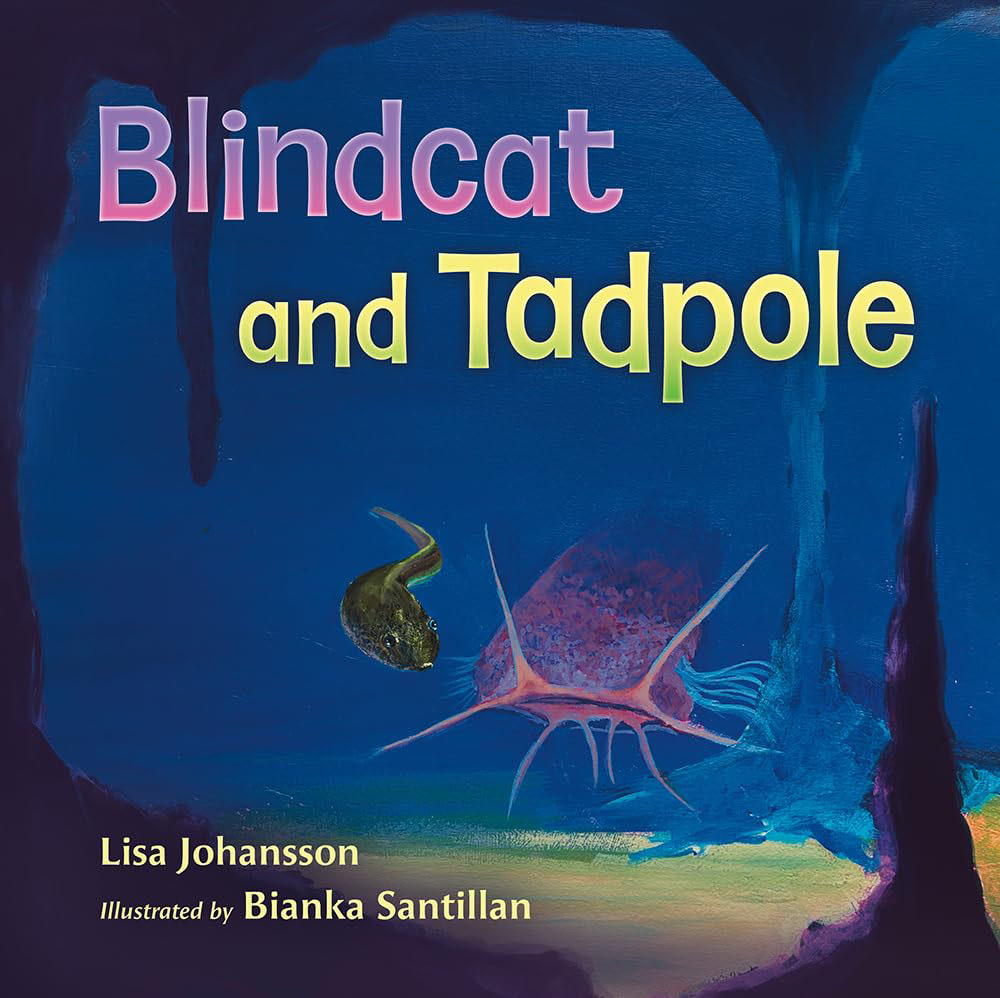
Author Lisa Johansson releases Blindcat and Tadpole In January 2025, author Lisa Johansson released a wonderful new children's book, Blindcat and Tadpole, which highlights the Mexican Blindcat, an interesting and endangered species, while exploring aquifer systems and the diversity of life they host. It is available on Amazon.
City Council hears update on Edwards Aquifer Protection Program On January 15, Grant Ellis, Natural Resources Manager for the San Antonio Parks and Recreation Department, offered City Council an update on the Edwards Aquifer Protection Program, a program first initiated by voters in May 2000 to purchase tracts of land or conservation easements for Edwards protection. After summarizing the background of the program, Ellis detailed how a Scientific Evaluation Team identifies potential land for conservation, ranking properties based on water resources, biology, property size, and location. He then described the acquisition approach, which can include fee simple ownership or conservation easements, and noted that 95% of property interests acquired so far are conservation easements. He also noted that all properties are monitored annually by City of San Antonio and Edwards Aquifer Authority staff. Ellis also noted that some purchased properties have been able to be used in other ways in addition to Aquifer protection. For example, purchased properties were added to the Government Canyon State Natural Area and most of the Classen-Steubing Ranch Park was acquired using Aquifer protection dollars. Ellis said that so far, 187,343 acres of land have been protected through the Program. In 2025, using $10 million adopted in the city's budget, the Program will continue to target properties in sensitive recharge and contributing zones, and also work to connect existing protected lands. |